
To seriously step up your padel game, you need to sharpen your attack from the net and tighten up your defense from the back. This isn't just a coach's gut feeling; it’s a strategy backed by solid research on how professional players win and lose points. The core takeaway is simple: the vast majority of winning points come from aggressive shots hit near the net, while most errors creep in when players are forced to defend from the back of the court. This pattern, observed in top-level matches, gives you a clear roadmap for where to focus your energy and how to think about every point.
Think of the net zone as your scoring sweet spot. When you're up there, hitting powerful smashes (overhead shots meant to drive the ball down with force, often making it bounce out of the court after hitting the back glass wall) and quick volleys (hitting the ball before it bounces, typically from close to the net), your chances of winning the point skyrocket. These are your knockout punches. Being at the net means you control the angles, you cut down your opponents' reaction time, and you can dictate the pace of the rally. The research clearly shows that pros are masters of using this court position to their advantage, consistently converting these offensive shots into points.
On the flip side, the study highlighted that groundstrokes (forehands and backhands hit after a single bounce, usually from the baseline) and lobs (high, arcing shots designed to send the ball over the opponents' heads to gain time or position) are where players make the most errors. This doesn't mean these shots are bad; they're absolutely essential for padel. A good lob can buy you crucial time to recover position, and consistent groundstrokes keep you in the rally. However, their primary role is defensive or transitional—they are tools to help you reset the point, get back into position, or, crucially, work your way to the net. Trying to hit outright winners from deep in the court with these shots often backfires.
The central pattern is undeniable: control the net, and you control the scoreboard. This insight is incredibly powerful for club players because it moves beyond vague advice. It gives you concrete strategic goals: dominate the net, and minimize unforced errors when you're defending from the back. Knowing that winning professional pairs achieve 20% more winning shots than errors during their matches underscores the critical balance between offensive aggression and defensive consistency. It’s not about flashy shots; it's about smart, high-percentage play.
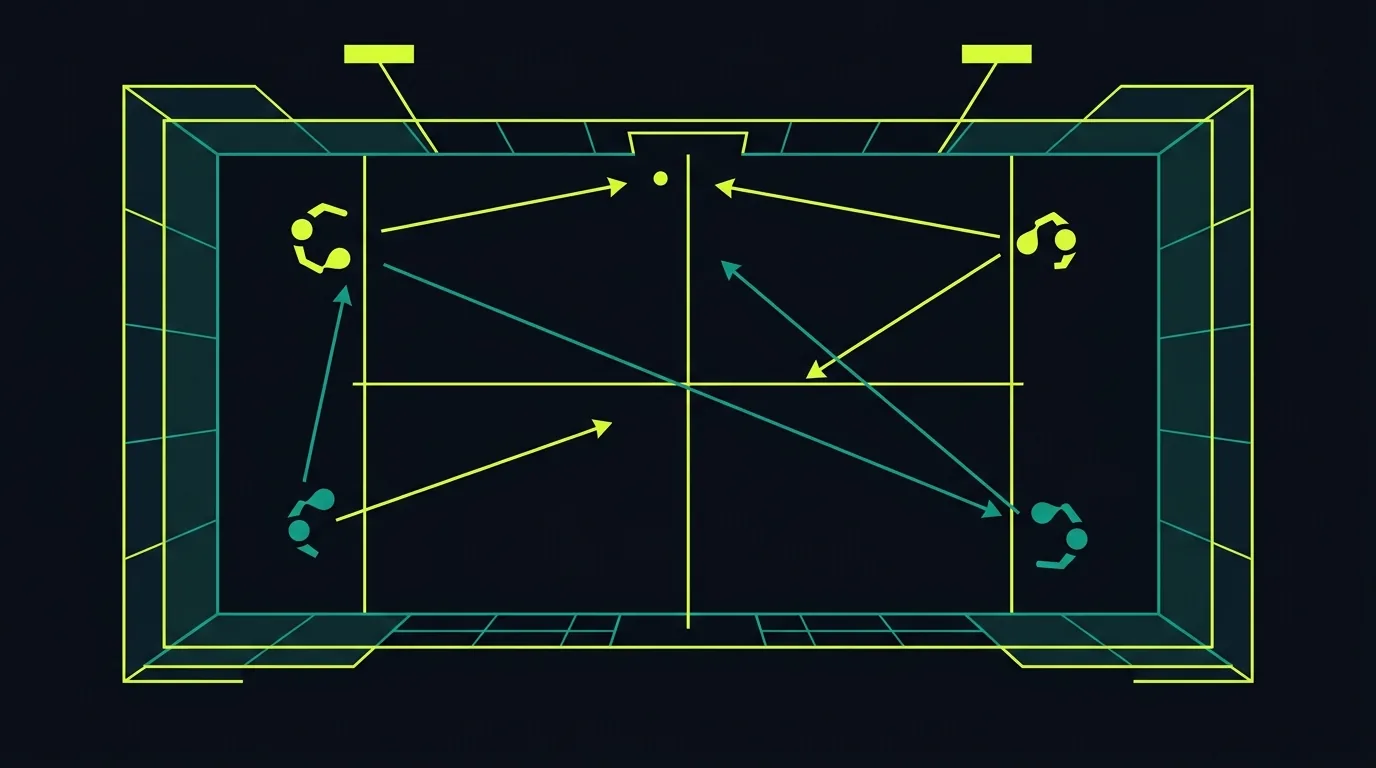
On court: try this
Alright, let's get concrete. When you're in a match, consciously aim to put these findings into action. Every point is an opportunity to execute.
- Assert Yourself with the Volley: Imagine your opponents have hit a deep lob (a high, arcing shot) that has pushed you back, but you've managed to hit a solid return. As their ball comes back, look for any chance to step forward. Get yourself to the net. When they hit a ball towards you, don't just block it. Attack it. Meet the ball early, well in front of your body, and drive your volley (hitting the ball before it bounces) with purpose. Aim for their feet, or sharply into the side glass (the side walls of the court) and away from them. This cuts off their angles and gives them less time to react. If the ball is slow or high, take a step inside the service line to hit an even more aggressive, angled volley.
- Seize the Smash Opportunity: You've been working the point, forcing your opponents deeper and deeper. Finally, one of them sends up a lob that's a bit too short—it's high, but it's not going to reach the back wall. This is your cue! Get under the ball quickly, turn your shoulders, and unleash your smash. Focus on hitting it with power and control, aiming for the back glass with enough spin to make it bounce out of the court if possible. Don't be timid. Even if you can't hit it out, a strong smash aimed at the back glass is incredibly difficult to return effectively. This is your chance to finish the point.
- Groundstrokes with a Purpose: You're in a defensive rally, stuck at the back of the court after your opponents have driven you deep. Instead of trying a low-percentage winner from there, use your groundstrokes (forehands and backhands hit after a bounce) intelligently. Hit deep, consistent balls that force your opponents to play off their back wall. The goal isn't to win the point with this shot, but to create a slight weakness in their return. As soon as you hit that deep, forcing groundstroke, immediately take one or two solid steps forward to start your transition towards the net.
Coach's Tip: Think of every shot from the back of the court as a brick in your path to the net. Each one should get you closer to your scoring zone.
Drills to practise
Let's get those patterns ingrained with some practical drills you can do.
- Volley Attack & Defense Drill (with partner):
- Overhead Consistency Drill (with partner):
- Groundstroke to Advance Drill (with partner):
Common mistakes
Even with the best intentions, players often fall into predictable traps. Here are some common errors related to these findings and how to fix them:
* Lingering at the back of the court: Many players get comfortable defending from the baseline, even when an opportunity arises to move forward. This makes them vulnerable to volleys and allows opponents to dominate.
* Quick fix: Implement a "two-step rule." After any deep, well-placed groundstroke or lob, take at least two aggressive steps towards the net. Make it a non-negotiable habit.
* Passive net play: You've fought to get to the net, but your volleys lack power and intent, making them easy for opponents to return.
Quick fix: Focus on attacking the ball in front of your body. Use a short, punchy swing. Visualize hitting through* the ball rather than just blocking it. Aim for low targets at your opponents' feet or sharp angles into the side walls (the glass and grid fencing that enclose the court).
* Over-reliance on groundstrokes and lobs for winners: Trying to hit flashy winners from the back of the court often results in unforced errors, as these shots have a higher error rate.
* Quick fix: Reframe these shots. Your lob is for defense, to buy time, and to gain net position. Your groundstroke is for consistency, depth, and setting up your advance. Only attempt a winning groundstroke if it's an absolute sitter.
* Poor overhead technique on crucial points: When a high ball comes, your smash (an overhead shot) might be erratic – either into the net, out, or easily returned.
* Quick fix: Work on your trophy pose and high contact point. Get sideways, point your non-hitting hand at the ball, and make contact at the highest possible point in front of you. Think about "throwing" your racquet at the ball, letting your body rotate into the shot. Consistent practice against the glass or a partner will build muscle memory.
Take it to your next match
Alright, padel player! You've got the insights and the drills. Next time you step onto the court, make these two things your unwavering focus. First, consciously strive to dominate the net. Get there, stay there, and hit those volleys and smashes with conviction. This is where you convert pressure into points. Second, when you're forced to defend from the back, be smart: hit consistent, deep groundstrokes and well-placed lobs, but understand their role is to get you back to the net, not to win the point outright. Trust the data, trust your practice, and you'll feel your game get sharper, more intentional, and more effective in every rally!